
How to Create a Parenting Plan that Reduces Future Conflict
A thoughtful guide to making parenting decisions that support your children—not just your divorce.
By: James Traub • Updated: July 2026
When most parents hear the words parenting plan, they picture a legal document.
A schedule.
A calendar.
A stack of paperwork that needs to be completed before the divorce is finalized.
But that’s only a small part of what a parenting plan really is.
At its best, a parenting plan isn’t simply about dividing time between two homes.
It’s about creating clarity.
It’s a roadmap for how two parents will continue raising their children after separation. The conversations you have today about schedules, holidays, communication, decision-making, transportation, school events, vacations, and future disagreements will often shape your family’s day-to-day experience for years to come.
The more thoughtfully those conversations happen now, the fewer opportunities there are for misunderstandings, unnecessary conflict, and stressful decisions later.
Whether you’re preparing for mediation, working with attorneys, or simply beginning to think about life after separation, investing time in a thoughtful parenting plan is one of the greatest gifts you can give your children.
A parenting plan isn’t simply about deciding where your children will be. It’s about deciding how you’ll continue parenting together.
Why Parenting Plans Matter More Than Most People Realize
Many parents don’t think much about a parenting plan until someone asks them to complete one.
Suddenly they’re confronted with questions they haven’t yet considered.
Who makes major medical decisions?
How will holidays be shared?
Who signs children up for activities?
How much notice should be given before vacations?
What happens if someone is running late?
How will disagreements be resolved?
Individually, none of these questions feels particularly overwhelming.
Together, they become the operating manual for your future co-parenting relationship.
That’s why a parenting plan should never be viewed as just another document to complete.
Done well, it creates shared expectations that reduce uncertainty for both parents and children.

Every Unanswered Question Becomes Tomorrow’s Decision
Most parenting conflict isn’t caused by parents wanting different things for their children.
It’s caused by having to make important decisions in stressful moments:
A last-minute request to switch weekends
A disagreement about signing up for sports
Questions about holidays
Travel
Transportation
School events
Medical appointments
None of these situations are unusual.
But without clear expectations, each one has the potential to become another difficult conversation.
A parenting plan allows you to make many of those decisions ahead of time—when you’re calmer, more collaborative, and better able to think about the long-term needs of your children.
That’s its real purpose.
Not predicting every future situation.
Creating enough clarity that future decisions become easier.
Every parenting plan is really a collection of future decisions you’ve chosen to make while you’re calm instead of during conflict.
Start With Your Children—Not Your Schedule
When parents begin creating a parenting plan, it’s natural to focus on the schedule.
Who has Mondays?
Who has alternating weekends?
What time are exchanges?
Those questions matter.
But they’re not the best place to begin.
Instead, start by asking a different question:
“What arrangement is most likely to support our children’s well-being, stability, and relationship with both parents?”
That subtle shift changes the entire conversation.
Instead of focusing primarily on what’s fair for the adults, you begin thinking about what’s healthiest for your children.
Children don’t experience parenting plans as percentages.
They experience them as routines.
Consistency.
Predictability.
Feeling safe in both homes.
When children remain at the center of your decisions, the schedule often becomes much easier to build.
Think Beyond the Weekly Schedule
Most people think a parenting plan is primarily about where children spend their time.
In reality, the schedule is only one piece of a much larger picture.
Healthy parenting plans also create clarity around:
Communication between parents
Decision-making responsibilities
Holidays and vacations
Transportation and exchanges
School and extracurricular activities
Resolving disagreements when they arise
These conversations may not feel urgent today.
But they often become the moments that determine whether co-parenting feels collaborative—or consistently stressful.
The more clarity you create today, the fewer opportunities there are for misunderstandings tomorrow.
Build a Plan That Can Grow With Your Family
No parenting plan can anticipate every future situation.
Children grow
Schedules change
Activities evolve
Jobs change
Families adapt
A strong parenting plan provides enough structure to create stability while remaining flexible enough to adapt as life changes.
Rather than trying to predict every future scenario, focus on creating a process for making future decisions together.
When parents agree on how they’ll communicate, request changes, and resolve disagreements, the parenting plan becomes much more resilient over time.
Focus on Building a Co-Parenting Relationship
The parenting plan itself isn’t the goal.
The relationship behind it is.
Children benefit most when parents learn to communicate respectfully, solve problems together, and keep conflict away from them whenever possible.
That’s not always easy.
It certainly doesn’t require becoming best friends.
But it does require recognizing that while your marriage may be ending, your parenting relationship is likely just beginning.
One of the healthiest questions parents can continue asking is:
“What kind of co-parenting relationship do we hope to have five years from now?”
That future often begins with the conversations you’re having today.

Your Future Self Will Thank You
Imagine it’s two years from now…
Your child has a soccer tournament.
One parent wants to switch weekends because of a family wedding.
A grandparent plans a birthday celebration.
School starts earlier than expected.
None of these situations feels like a crisis.
Unless no one knows what to expect.
The conversations you have today make those moments easier tomorrow.
That’s one of the greatest benefits of a thoughtful parenting plan.
It doesn’t eliminate every disagreement.
It simply gives your family a stronger foundation for working through them.
Thinking About A Parenting Plan Is Different Than Writing One
Understanding the importance of a parenting plan is one thing.
Working through the conversations that shape it is another.
That’s why I created the Parenting Plan Discussion Guide.
Rather than providing a legal template to fill out, this workbook walks you through the practical conversations that help parents clarify expectations, identify potential challenges, and build a parenting plan that’s realistic, child-centered, and designed to support long-term co-parenting.
BUILD A PLAN THAT SUPPORTS YOUR CHILDREN
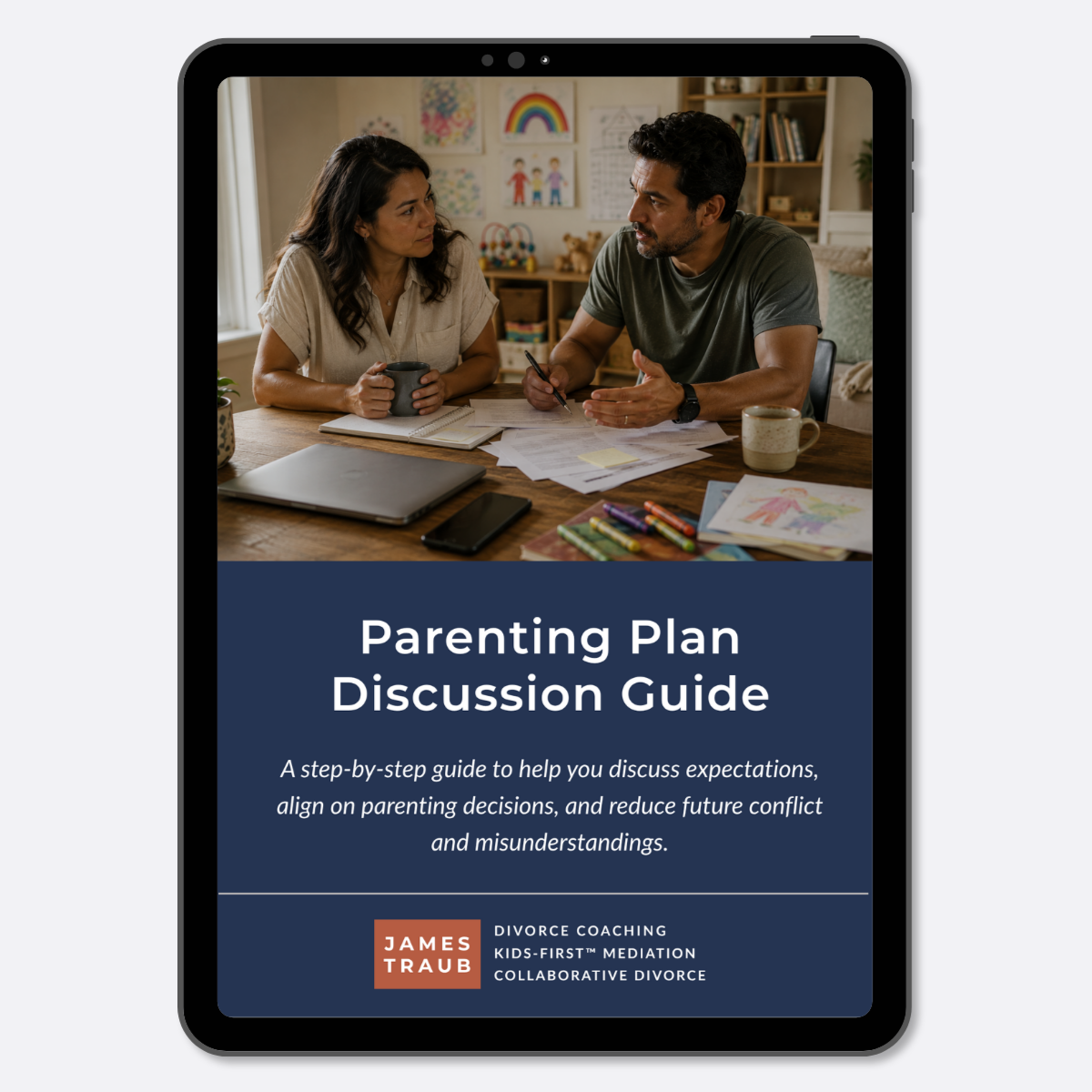
Parenting Plan Discussion Guide
A practical step-by-step workbook to help you discuss expectations, align on parenting decisions, and reduce future conflict and misunderstandings.
Clarify schedules, holidays, and vacations

Define decision-making, communication, and day-to-day responsibilities
Plan for exchanges, transportation, and school activities
Prepare for future changes, flexibility, and introducing new partners
Create strategies for resolving disagreements before they become conflict
Build a child-centered plan that both parents can live with
✓ Instant Download
✓ Use at your own pace
✓ Private & confidential

You Don’t Have to Figure This Out Alone.
Every family is different. Your children’s ages, personalities, experiences, and needs all deserve thoughtful consideration. If you’d like a neutral sounding board as you prepare for this conversation, I’d be happy to help.
No pressure. Just a conversation.